
Things to Do in Kathmandu in September
September weather, activities, events & insider tips
Low Season · Budget Friendly
September Weather in Kathmandu
Temperature, rainfall and humidity at a glance
83°F (28°C)
High Temp
65°F (18°C)
Low Temp
8.2 inches (208 mm)
Rainfall
70%
Humidity
⚠ Watch for localized flash flooding in Kathmandu's older neighborhoods. Drainage struggles during intense downpours. Stay alert. Move to higher ground if needed.
⚠ Landslide risk climbs on mountain roads outside the valley. Check conditions before any long-distance road travel. Your schedule is flexible. Your safety is not.
Is September Right for You?
Weigh the advantages and considerations before booking
Advantages
- + The tail-end of monsoon season washes the Kathmandu Valley clean. The air turns crisp. The distant Himalayas stand in sharper relief than the dusty haze of spring.
- + Crowds are still relatively thin. You'll find breathing room at Swayambhunath's golden stupa. The queues at Patan Museum are mercifully short. That luxury vanishes by October.
- + The valley's rice paddies hit their most vivid emerald. Even a short drive to places like Bungamati becomes a journey through lush, terraced landscapes.
- + Hotel rates run lower than the peak trekking months. You can often snag a room at a heritage Newari courtyard hotel with just a few days' notice.
Considerations
- − The 8.2 inches (208 mm) of rain isn't a constant drizzle. It arrives in powerful afternoon downpours. Thamel's alleyways can turn into ankle-deep streams for an hour.
- − The mountains look clearer from the valley. The trails themselves can be slick and leech-filled. High-altitude trekking like the Everest Base Camp route becomes a muddier, more challenging proposition.
- − Some remote road connections face higher risk. The Arniko Highway to the Tibetan border and the winding route to Namobuddha both see more landslides or delays.
Best Activities in September
Top things to do during your visit
September in Kathmandu is the monsoon's last grand act. The rains have been falling since June, and by now the Kathmandu Valley wears them like a second skin. Afternoon downpours roll in with theatrical punctuality, the sky darkening to slate over Swayambhunath before sheets of warm rain hammer terracotta rooftops and send rivulets coursing through the cobbled lanes of Asan. Between storms, the air is thick and green-smelling, heavy with moisture at seventy percent humidity, and the rice paddies ringing the valley glow an almost radioactive emerald. Temperatures swing from a sticky high near 83°F in the midday sun to a merciful 65°F after dark, when mist settles into the alleyways and the smell of wood smoke mixes with wet stone. What transforms September from mere wet season into something worth planning around is Indra Jatra, Kathmandu's most important street festival, cresting in late September. The old city around Hanuman Dhoka erupts: masked Lakhe dancers whirl through crowds pressed against carved wooden balconies, the deep resonance of Dhime drums vibrates in your sternum, and thousands of mustard-oil wicks flicker in the damp air, their oily smoke curling through Durbar Square. The Living Goddess Kumari, a prepubescent girl believed to be an incarnation of Taleju, is pulled through the streets on a towering chariot while onlookers crane for a glimpse of her kohl-rimmed eyes. This is not a tourist performance. It is Kathmandu at its most unselfconscious, locals jostling for blessings, the smell of sel roti frying at makeshift stalls, rice beer flowing freely. You will be soaked, either by rain or by the sheer density of the crowd. Both are part of the bargain. Expect roughly ten rainy days out of thirty, with over eight inches of rainfall concentrated in intense afternoon bursts. Mornings are often clear and soft, the Himalayan foothills visible through gaps in the cloud cover before the day's heat builds the next storm. This rhythm shapes everything: temple visits and walking tours belong to the morning hours, while afternoons are for cooking classes, museum interiors, or sitting under a corrugated awning with a cup of chiya watching the gutters overflow. The city is quieter than peak season, the trekking crowds thinner, the guesthouses less frantic. Kathmandu in September belongs to those willing to negotiate with the rain, and the rain is generous in what it gives back.

Everest Base Camp Trek
adventureThe Everest Base Camp Trek is not a day hike with a view. It is a sustained walk through the Khumbu Valley over roughly two weeks, climbing from the terraced farmland around Lukla through rhododendron forest and glacial moraine to the foot of the highest point on earth. At 5,364 meters, base camp itself is a windswept sprawl of tents on shifting ice, the Khumbu Icefall groaning and cracking overhead, the air so thin that lifting your pack feels like an act of will. The route passes through Sherpa villages where prayer flags snap in cold wind, monasteries where monks chant behind walls of stacked mani stones, and teahouses where you fall asleep to the sound of ice calving somewhere in the dark.
Standing at the foot of Everest, hearing the icefall shift and feeling the altitude press against your lungs, recalibrates your sense of what landscape can do to a person.
Insider tip: Fly into Lukla on the earliest morning departure from Kathmandu, when cloud cover is lowest and Tenzing-Hillary Airport's notoriously short runway is most visible to pilots.
This month: September falls in the tail end of monsoon season, meaning the Khumbu region sees frequent cloud cover and trail sections can be muddy or obscured. Flights to Lukla face higher cancellation rates due to weather. Some trekkers prefer this window for the solitude and lush valley scenery. But visibility of Everest's summit is less reliable than in the post-monsoon months.

Local Women Lead Nepali Cooking Class
foodThe Local Women Lead Nepali Cooking Class puts you in a home kitchen in Kathmandu with women who learned to cook not from recipes but from decades of muscle memory passed through mothers and grandmothers. You will grind spices on a flat stone, the sharp bite of cumin and coriander rising from the mortar, and learn to temper them in mustard oil until the seeds pop and the kitchen fills with a nutty, peppery haze. The menu runs through the architecture of a Nepali dal bhat meal, from the lentil soup simmered to velvet to the achaar, a tomato-and-sesame pickle with enough heat to make your eyes water.
Eating dal bhat in a restaurant tells you what Nepali food tastes like. Making it in a local woman's kitchen teaches you why it tastes that way.
Insider tip: Wear clothes you do not mind staining with turmeric, which bonds to fabric permanently, and ask your host to show you how she makes her particular version of gundruk, the fermented leafy green that varies household to household.

Private Full Day Kathmandu Day Tour | Top 4 UNESCO Heritage Sites
day_tripThe Private Full Day Kathmandu Day Tour covering the top four UNESCO Heritage Sites compresses the valley's spiritual and architectural density into a single guided arc. You move from the gilded eyes of Boudhanath Stupa, where Tibetan exiles circle the dome spinning copper prayer wheels, to the cremation ghats of Pashupatinath, where woodsmoke and marigold petals drift over the Bagmati River. At Swayambhunath, the so-called Monkey Temple, rhesus macaques skitter across whitewashed steps while the valley spreads below in a haze of cookfire smoke and rain-washed green. Kathmandu Durbar Square rounds out the day with its layered pagodas and carved erotic struts, earthquake-scarred but still standing.
Four sites in a single day gives you the full theological range of the Kathmandu Valley, from Hindu cremation rites to Tibetan Buddhist devotion, with a private guide who can read the iconography carved into every wooden strut and stone lintel.
Insider tip: Start at Boudhanath just after dawn, when the morning kora circuit is at its most meditative and the butter-lamp smoke inside the surrounding monasteries is thickest and most fragrant, before tourist buses arrive.
This month: During Indra Jatra in late September, Kathmandu Durbar Square hosts the festival's main processions, which may limit access to certain temples but has a once-a-year spectacle of masked dancers and the Kumari's chariot.

The Most Beautiful 1 Day Experience in Kathmandu Nepal
guided_experienceThe Most Beautiful 1 Day Experience in Kathmandu Nepal is a curated full-day guided route that threads together the Kathmandu Valley's most photogenic and spiritually charged corners. Expect narrow medieval lanes where carved wooden windows lean overhead at precarious angles, the cool interior of courtyards where Hindu and Buddhist iconography sit side by side on the same wall, and hilltop viewpoints where the city's terra-cotta sprawl meets terraced green hillsides. The pace is unhurried, with time built in for tea stops at local shops where the owner pours sweet, milky chiya from a battered aluminum kettle while rain drums on the tin roof outside.
This tour prioritizes atmosphere over checklist, spending time in the quiet courtyards and backstreet shrines that most day tours drive past on the way to the next headline monument.
Insider tip: Bring a lightweight rain shell that packs into its own pocket rather than an umbrella; Kathmandu's narrow lanes and crowded temple stairs make umbrellas more hindrance than shelter, and you will want both hands free for steep stone steps.

Private tour of Major highlights of Kathmandu top rated places
private_tourThe Private Tour of Major Highlights of Kathmandu Top Rated Places delivers a tailored route through the city's most significant sites with a dedicated guide who adjusts the itinerary to your pace and curiosity. You might linger at the cremation platforms of Pashupatinath, watching families carry shrouded bodies to the river's edge while sadhus smeared in ash sit cross-legged nearby, or spend an extra half hour at Patan Durbar Square, where the Newar metalwork in the Golden Temple is so fine you can count individual feathers on a bronze Garuda. The private format means you skip the convoy pace of group tours and can duck into a backstreet bhatti for momos when the rain hits, steam rising from the bamboo baskets, the dough slippery and the filling spiked with Sichuan pepper.
A private guide means the difference between seeing temples and understanding them, with the freedom to follow your questions into side streets and lesser-visited shrines that rigid itineraries skip.
Insider tip: Ask your guide to include a stop at Itum Bahal, one of Kathmandu's oldest Buddhist courtyards, rarely visited by tourists and home to an ancient tradition of feeding stray dogs as a merit-making act.

Kathmandu World Heritage Tour
culturalThe Kathmandu World Heritage Tour is a focused circuit of the valley's UNESCO-inscribed monuments, with emphasis on the historical and architectural narrative connecting each site. At Boudhanath, you walk the kora path with Tibetan refugees who rebuilt their community around this dome after fleeing across the Himalayas, the low hum of chanted mantras blending with the clatter of prayer wheels. Pashupatinath smells of sandalwood and ash, the ghats busy with the daily work of Hindu cremation while long-tailed langurs watch from the temple roofline above. The tour's cultural framing connects these sites not as isolated attractions but as chapters in a single story about how the Kathmandu Valley became a crossroads of Hinduism and Buddhism over two millennia.
This tour treats the UNESCO sites as a connected narrative rather than a scattered checklist, revealing how each monument is a different layer of the valley's religious and artistic history.
Insider tip: At Pashupatinath, cross the Bagmati to the far bank where a row of small Shiva shrines sits largely ignored by tour groups. The carvings are beautiful and the elevated vantage gives you a contemplative view of the cremation ghats without intruding on mourning families.
This month: September's monsoon rains keep the Bagmati River higher and faster than dry-season months, giving Pashupatinath's ghats a different character, with the river flowing rather than reduced to a trickle.
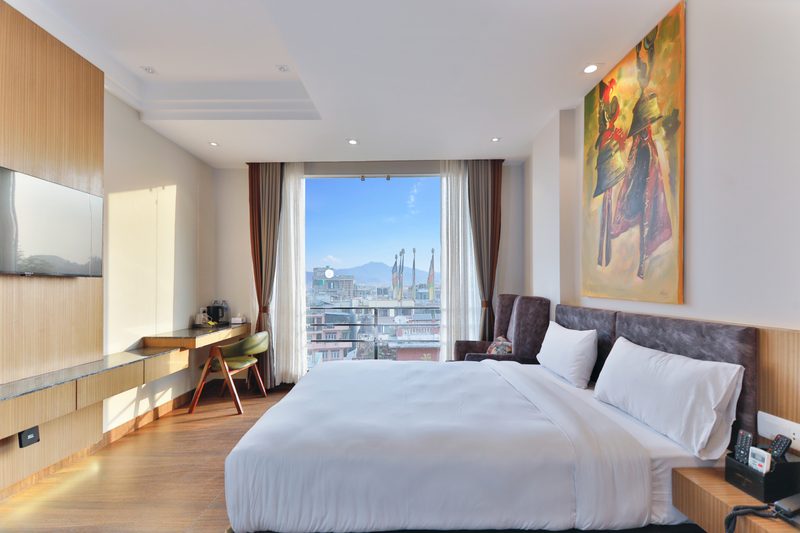
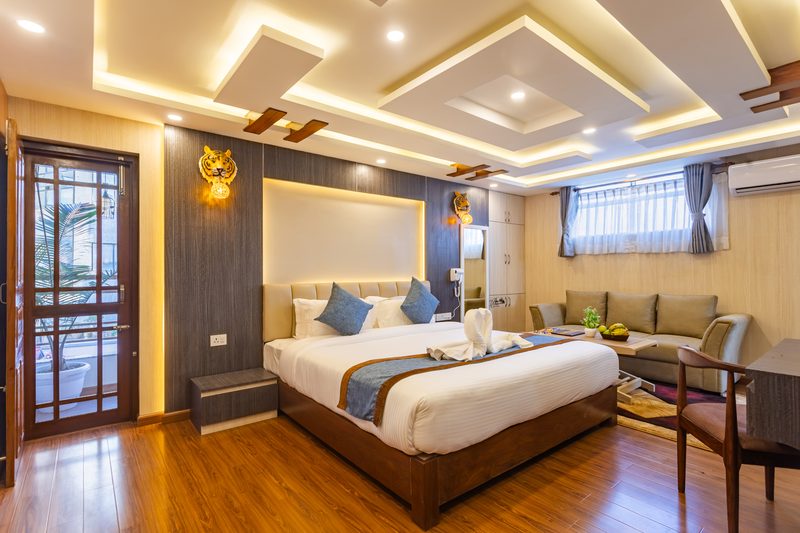
Where to Stay in Kathmandu in September
Hand-picked hotels across price tiers for September travellers.
September Events & Festivals
What's happening during your visit
Late September
Indra Jatra
Kathmandu's biggest street festival culminates in the Living Goddess Kumari's chariot procession through the old city. The air thrums with traditional Dhime drums and the smell of mustard oil from thousands of wick lamps. The climax, where the king's descendant offers payment to the goddess for the year's rainfall, feels cosmically appropriate in September. You'll be shoulder-to-shoulder with locals in Hanuman Dhoka square. A rare moment of pure, unfiltered celebration.
Packing Checklist
Bookmark this page — your progress is saved between visits
Need the full list with shopping links?
Climate-specific gear, brand recommendations, and what to leave at home.
View Kathmandu Packing List →Essential Tips
Insider knowledge and common pitfalls to avoid
Insider Knowledge
Locals drink hot ginger-lemon-honey tea year-round. In September's damp, they call it medicine. Join them at a street-side stall. The ginger bite cuts humidity like nothing else.
Visit the Garden of Dreams in Thamel right after heavy rain. The 1920s neo-classical pavilions empty out. Flowers wear water like jewels. Wet earth and night-blooming jasmine fill the air. Memorable.
Small family-run restaurants in Patan or Bhaktapur often close during Indra Jatra. Everyone returns to ancestral homes in Kathmandu proper. Your favorite spot might be shuttered. Plan accordingly.
Hear a conch shell echo through alleys in late afternoon? That is no festival. A local astrologer marks the end of an inauspicious period. Rain-cleared air carries the sound farther than you expect.
Avoid These Mistakes
Never assume a sunny morning means dry skies. Clouds build with real weight over the valley by early afternoon. Carry that rain layer. Always.
Skip multi-day treks without serious prep for mud, leeches, and closed tea houses. September belongs to valley exploration, not alpine conquests. Wait for October.
Do not fight the traffic. Rains slow everything. A 5 km (3.1 mile) drive across town can swallow an hour. Build buffer time into every single day.
Explore More Activities in Kathmandu
Didn't see anything interesting yet?
Browse Viator's full catalog of tours, day trips, food experiences, and private guides in Kathmandu.
See All Kathmandu Tours on Viator