Kathmandu - Things to Do in Kathmandu in January

Things to Do in Kathmandu in January

January weather, activities, events & insider tips

Good time to visit Shoulder Season · Good Value

January Weather in Kathmandu

Temperature, rainfall and humidity at a glance

66°F (19°C) High Temp
37°F (2°C) Low Temp
0.6 inches (15 mm) Rainfall
70% Humidity
⚠ Near-freezing temperatures, pack warm layers

Is January Right for You?

Weigh the advantages and considerations before booking

Advantages
  • + January delivers the clearest Himalayan views of the year. Mornings break with crystalline air that reveals the snow-capped Annapurna range from Kathmandu's valley rim. Most months obscure this sight with haze.
  • + The post-monsoon landscape stays surprisingly green. Terraced fields around the valley hold their color. The chill keeps dust down on Kathmandu's unpaved back lanes.
  • + This is the dry season's sweet spot. December's bone-chilling nights have eased slightly. The pre-monsoon pollen haze has not arrived. Long days exploring on foot become ideal.
  • + Festival season is quiet. Temples like Pashupatinath and Swayambhunath belong more to murmuring pilgrims and circling kites than to tour groups. You can hear the actual rituals.
Considerations
  • That 'warm and humid' feel in the weather data? It lies by midday. At 1,400 meters (4,600 ft), direct sun feels hot enough for shirtsleeves. Step into a Kathmandu alley's shadow or after sunset, and the temperature plummets. You will be layering and shedding all day.
  • While rainfall is low, those 10 rainy days mean brief, cold afternoon drizzles. These slick the uneven brick lanes of the old city into treacherous slopes. The humidity makes the chill seep into stone buildings.
  • This is the tail end of the main trekking season. Kathmandu itself is not packed. Flights into Tribhuvan Airport and quality guides for day trips to nearby valleys can still be scarce without advance planning.

Best Activities in January

Top things to do during your visit

January hits Kathmandu like a cold, quiet exhale. Morning temperatures hover near freezing. The city wakes under a pale haze that clings to the valley floor until mid-morning, when the sun finally burns through and pushes the air toward mild afternoon warmth. The sky, once clear, reveals the white ridgeline of the Langtang range to the north. Sharp. Close enough to feel almost intrusive. This is the dry season at its driest: rain is nearly absent, the brick-paved alleys of the old city stay dusty underfoot, and the light turns golden and flat by three in the afternoon. The rhythm of the month belongs to Maghe Sankranti, the mid-January festival that marks the slow pivot toward longer days. Kathmandu's markets shift their character overnight. At Asan Tole, vendors stack pyramids of orange yams and bundles of purple sugarcane alongside brass trays heaped with til ko laddu, the dense sesame-seed sweets that taste of roasted nuttiness and jaggery. The air around every neighborhood sweet shop carries the warm, caramelized scent of chaku, molasses hardened into dark blocks and snapped apart with a satisfying crack. Families eat together at home rather than crowding temples, so the streets take on a rare, unhurried calm, punctuated by the sound of pressure cookers whistling behind wooden window screens. For travelers, January's cold mornings and dry afternoons create ideal conditions for walking Kathmandu's layered geography: the medieval Newar courtyards of Patan, the towering white dome of Boudhanath where juniper smoke curls from rooftop incense burners, the steep carved-stone steps of Swayambhunath where rhesus macaques sit grooming each other in the thin winter sunlight. The cool air keeps the city's diesel-and-dust haze lower than in the pre-monsoon months, and the lack of rain means temple brickwork stays warm and dry to the touch. Evenings drop fast, though. Cold enough to send everyone indoors by six. The narrow lanes of Thamel fill with the amber glow of restaurant windows and the smell of garlic naan baking in tandoor ovens.

Everest Base Camp Trek

Everest Base Camp Trek

adventure
5.0 145 reviews from $1800

The Everest Base Camp Trek is not a day hike and not a casual undertaking. It is a twelve-to-fourteen-day walk through the Khumbu region that begins with a gut-dropping flight into Lukla's short mountain runway and ends at the glacial moraine below the Khumbu Icefall, where the air is thin enough to make conversation feel like effort. Along the way, the trail threads through Sherpa villages where prayer flags snap in the wind, past teahouses that smell of dal simmering and wood smoke, and across suspension bridges strung high above milky glacier-fed rivers that roar with a sound you feel in your sternum.

12-14 days Expensive Start at dawn each trekking day to reach the next teahouse by early afternoon, before afternoon clouds roll up the valleys and temperatures plummet.
This is the original high-altitude pilgrimage, a walk to the foot of the planet's tallest peak through a landscape so vertical and vast it recalibrates your sense of scale.
Insider tip: Book your internal flight to Lukla with at least two buffer days built into your itinerary on both ends, because winter weather delays and cancellations at Lukla are routine, not exceptional, and missing your flight out means waiting for the next clear morning.
This month: January is deep winter in the Khumbu. Expect nighttime temperatures well below freezing at higher elevations, thinner crowds on the trail compared to the autumn peak season, and exceptionally clear mountain views on cloudless mornings. Some higher teahouses may close for the season, limiting lodge options above Namche Bazaar.
Local Women Lead Nepali Cooking Class

Local Women Lead Nepali Cooking Class

food
5.0 131 reviews from $30

The Local Women Lead Nepali Cooking Class takes place in a home kitchen in Kathmandu, where the instructor, a Nepali woman, walks you through the layered spice logic of dal bhat, the twice-daily meal that is less a recipe than a national rhythm. You will grind whole cumin and coriander seeds with a stone mortar, temper mustard seeds in hot oil until they pop and release a sharp, peppery fragrance, and roll out sel roti dough, the ring-shaped rice bread that fries up crisp on the outside and chewy within. The meal you sit down to eat afterward, cross-legged if you choose, tastes different from restaurant versions because you built every element by hand and understand why the turmeric went in before the tomatoes.

3-4 hours Budget Morning sessions, starting around nine or ten, when the kitchen light is best and the local vegetable market nearby is still fully stocked.
Cooking alongside a local woman in her own kitchen is the fastest way to understand how Nepali food works, from raw spice to finished plate.
Insider tip: Ask your instructor to take you to the neighborhood spice shop before the class starts so you can see how whole spices are selected and buy small bags of Nepali timur, the Sichuan-pepper relative that numbs your tongue and tastes of grapefruit peel, to bring home.
This month: During Maghe Sankranti in mid-January, your instructor may incorporate seasonal festival foods like til ko laddu or chaku into the class, offering a window into the holiday kitchen that restaurant menus never show.
Private Full Day Kathmandu Day Tour | Top 4 UNESCO Heritage Sites

Private Full Day Kathmandu Day Tour | Top 4 UNESCO Heritage Sites

day_trip
5.0 110 reviews from $10

The Private Full Day Kathmandu Day Tour covering the top four UNESCO Heritage Sites compresses centuries of Newar civilization into a single guided day. You will stand in Kathmandu Durbar Square among the carved wooden struts of medieval palace architecture, where every beam end depicts a deity or an erotic scene rendered with startling anatomical frankness. At Swayambhunath, the hilltop stupa's painted eyes stare out over the valley with an expression that manages to look both serene and faintly amused, while the climb up the eastern staircase leaves your calves burning and your lungs full of juniper incense drifting from the monastery above. Boudhanath's massive white dome draws Tibetan Buddhist pilgrims who circle it at dusk spinning copper prayer wheels with a rhythmic clinking sound, and at Pashupatinath, Hindu cremation pyres burn on the stone ghats along the Bagmati River, the smoke rising in thin columns that carry the sweet, acrid scent of sandalwood and something older.

Full day (7-8 hours) Budget Start by seven thirty in the morning to reach Pashupatinath in the soft early light and finish at Boudhanath at dusk, when the stupa is lit by butter lamps and the kora circuit fills with chanting pilgrims.
Four UNESCO sites in one day, each from a different spiritual and architectural tradition, with a private guide who can explain the iconography you would otherwise walk past without understanding.
Insider tip: Ask your guide to visit Pashupatinath first thing in the morning, before the cremation ghats become crowded with tour groups, when the early light catches the gilded temple roof and the only sounds are temple bells and the river moving over stone.
This month: January's dry, clear air means the Himalayan range is often visible from Swayambhunath's hilltop platform, a sightline that disappears during the hazy pre-monsoon months.
The Most Beautiful 1 Day Experience in Kathmandu Nepal

The Most Beautiful 1 Day Experience in Kathmandu Nepal

guided_experience
5.0 93 reviews from $20

The Most Beautiful 1 Day Experience in Kathmandu Nepal is a guided immersion that moves beyond the standard monument checklist to fold in the city's living texture. The itinerary threads through the narrow medieval lanes of Bhaktapur, where potters still throw red clay vessels on kick-wheels in open courtyards, the wet clay gleaming under their hands, and past the golden gate of the old royal palace, its metalwork so dense with repousse figures that every square inch tells a different story. You will walk through neighborhoods where drying chili peppers and marigold garlands hang from upper-story windows, coloring the already warm brick facades in streaks of red and orange, and where the sound of a harmonium drifts from a second-floor music lesson.

Full day (7-8 hours) Budget Weekday mornings, when the artisan quarters of Bhaktapur are actively working rather than performing for weekend crowds.
This tour treats Kathmandu not as a collection of monuments but as a living city where craft, devotion, and daily commerce still overlap in the same courtyards they have for five hundred years.
Insider tip: Wear shoes you can slip on and off easily, because you will enter several temple courtyards and private workshops where footwear must be removed at the threshold, and fumbling with laces burns time your guide could spend explaining the fifteenth-century woodcarving in front of you.
Private tour of Major highlights of Kathmandu top rated places

Private tour of Major highlights of Kathmandu top rated places

private_tour
5.0 94 reviews from $39

The Private Tour of Major Highlights of Kathmandu Top Rated Places is a guided circuit that prioritizes depth over breadth, pairing the major temples and squares with the overlooked in-between spaces that give Kathmandu its layered character. Your guide will walk you through the narrow passages behind Kathmandu Durbar Square, where small neighborhood shrines sit wedged between residential buildings, their stone lingams draped in fresh marigold garlands and dusted with red sindoor powder. At Patan Durbar Square, the Newar metalwork on display in the Patan Museum is fine enough that you can see individual chisel marks on bronze Tara statues cast using the lost-wax method six centuries ago, the metal still warm-toned and alive under gallery lighting.

6-7 hours Budget Start early, by eight in the morning, to catch Patan Durbar Square before the souvenir sellers fully set up and when the slanting light picks out the carved window screens on the old Malla palaces.
A private guide means the itinerary bends to your curiosity, letting you linger at the one shrine or courtyard that stops you in your tracks rather than rushing through a fixed checklist.
Insider tip: Ask your guide to include a stop at the Golden Temple, Kwa Bahal, in Patan, a small monastery courtyard that most full-day tours skip but whose inner sanctum contains a dazzling gilded shrine tended by a rotating roster of local boys who serve as temporary monks.
Kathmandu World Heritage Tour

Kathmandu World Heritage Tour

cultural
5.0 85 reviews from $50

The Kathmandu World Heritage Tour is a structured cultural walk through the valley's UNESCO-listed sites with an emphasis on the religious architecture that makes Kathmandu singular among Asian capitals. At Boudhanath, the largest stupa in Nepal, you will join the kora circuit, walking clockwise with Tibetan refugees and monks whose maroon robes contrast sharply against the whitewashed dome, while the deep vibration of a monastery horn sounds from somewhere above. The tour includes Changu Narayan, the oldest temple in the valley, perched on a forested hilltop east of Bhaktapur, where the sixth-century stone inscription of King Mandeva is still legible if you know where to look, and where the surrounding sal forest smells of dry leaves and pine resin in the cool January air.

Full day (7-8 hours) Moderate Begin early to reach Changu Narayan by mid-morning, when the hilltop air is still crisp and the valley haze has not yet thickened enough to obscure the mountain views.
This tour connects the valley's scattered UNESCO monuments into a single coherent narrative of Newar art, Tibetan Buddhism, and Hindu devotion, with a guide who can decode the iconography on every carved strut and stone panel.
Insider tip: At Changu Narayan, walk past the main temple to the eastern edge of the hilltop, where a low stone wall offers an unobstructed view across the valley to the Himalayan range, a vantage point that most visitors miss because they turn back after seeing the main shrine.
This month: January's dry conditions and reduced haze make the mountain panorama from Changu Narayan's hilltop significantly clearer than during the monsoon or pre-monsoon months, when humidity and cloud cover often erase the northern horizon entirely.

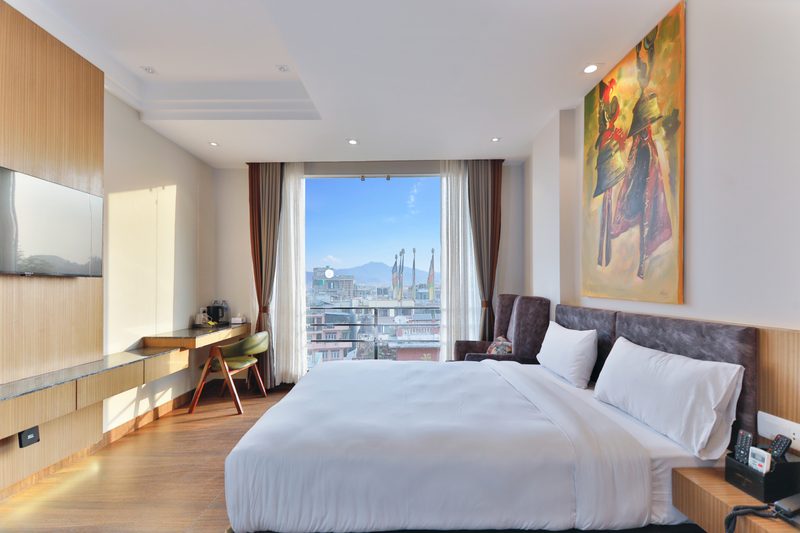
Where to Stay in Kathmandu in January

Hand-picked hotels across price tiers for January travellers.
January Events & Festivals

What's happening during your visit

Mid January
Maghe Sankranti

This mid-January festival marks the winter solstice's passing and the slow turn toward longer days. It is a family holiday, not a public spectacle. You will feel it in the markets: piles of sweet potatoes, yams, and sugarcane appear on street corners. Families gather to eat til ko laddu (sesame seed sweets) and chaku (molasses blocks). Visit the vegetable market at Asan Tole early on the festival morning for a glimpse. The air is thick with the nutty smell of roasting sesame and the chatter of shoppers buying auspicious foods.

Packing Checklist

Bookmark this page — your progress is saved between visits

Need the full list with shopping links?

Climate-specific gear, brand recommendations, and what to leave at home.

View Kathmandu Packing List →

Essential Tips

Insider knowledge and common pitfalls to avoid

Insider Knowledge
The best light for photography in the Kathmandu Valley falls between 9 AM and 11 AM in January. The haze hasn't built up yet. The sun sits low enough for texture. It sits high enough to illuminate courtyards. Locals fight the dry cold with endless cups of sweet, gingery milk tea. Skip the tourist cafes in Thamel. Find simple 'haldi ko doodh' (turmeric milk) from a street-side vendor in the late afternoon. It's warming. It's cheap. It feels like a genuine local ritual. If a cold drizzle sets in, abandon the planned temple run. Head to the Patan Museum instead. It occupies a restored palace courtyard. It's quietly magnificent. It's beautifully heated. Its explanations of Kathmandu Valley iconography will make every other site you visit make more sense. Book your domestic flight or tourist bus out of Kathmandu (to Pokhara, say) for the late morning. Early morning departures often face delays. Valley fog burns off by 9 AM.
Avoid These Mistakes
Don't pack only for 'cold' weather. You need a full layering system. Bring a thermal. Bring a fleece. Bring a wind layer. You will experience all three seasons in a single January day in Kathmandu. Don't assume clear skies mean warm weather. The radiant heat loss at night is intense. That cozy restaurant terrace dinner will leave you shivering by 8 PM. Bring that extra layer. Don't try to arrange a multi-day trek like the Annapurna Base Camp at the last minute. It's possible. The best teahouses on the popular routes are often still booked by groups. Plan and book any trekking itinerary well before you arrive.
Explore More Activities in Kathmandu

Didn't see anything interesting yet?

Browse Viator's full catalog of tours, day trips, food experiences, and private guides in Kathmandu.

See All Kathmandu Tours on Viator