
Things to Do in Kathmandu in October
October weather, activities, events & insider tips
Shoulder Season · Good Value
October Weather in Kathmandu
Temperature, rainfall and humidity at a glance
80°F (27°C)
High Temp
57°F (13°C)
Low Temp
1.7 inches (43 mm)
Rainfall
70%
Humidity
⚠ Watch for occasional afternoon thunderstorms. Localized heavy rain triggers flash flooding in valley streams and road washouts on mountain routes.
Is October Right for You?
Weigh the advantages and considerations before booking
Advantages
- + October strips away summer's monsoon haze. Himalayan views from Swayambhunath and Nagarkot sharpen dramatically. You can count ridges on Ganesh Himal with naked eyes. July delivers only gray soup. You will see nothing.
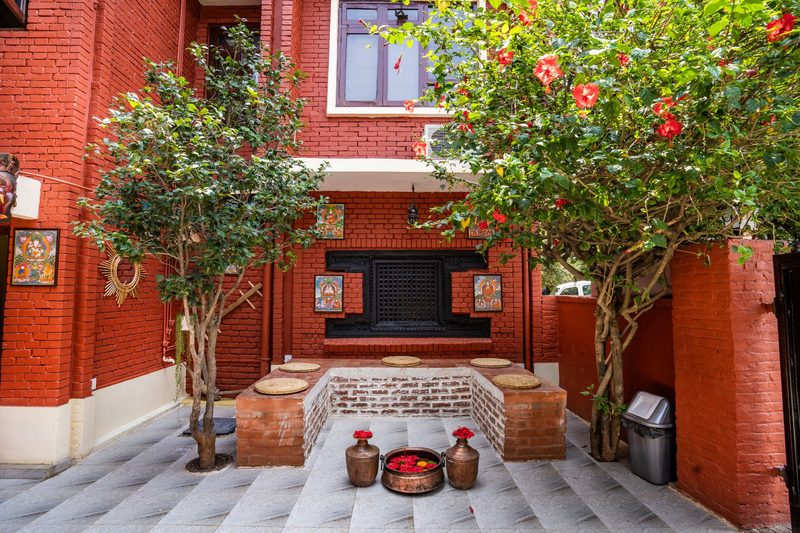
- + Post-monsoon Kathmandu Valley transforms. Brick-red earth turns green. Rice paddies around Bhaktapur glow emerald. Morning walks to Kopan Monastery carry scents of damp soil and marigolds. Monsoon mildew fades.
- + Shoulder season delivers. Thamel's guesthouses have rooms without January's high-season markup. Temple bells at Pashupatinath ring clear. Crowd noise drops. You can hear them.
- + Air temperature feels like warm bath after midday. Good for Patan Museum's courtyard. Sip masala tea. Watch afternoon light hit golden torana above Mul Chowk. Slow down here.
Considerations
- − 'Variable' conditions mean brilliant morning sun. Then afternoon downpour turns unpaved lanes into calf-deep mud. Plan temple-hopping before 2 PM. Weather shifts fast.
- − October keeps 70% monsoon humidity. Clothes stick by 11 AM walking Asan Tole market. Fancy camera lenses fog stepping indoors. Pack accordingly.
- − Less crowded than peak season, yes. But Durbar Square's restoration scaffolding multiplies yearly. Navigate construction tape. Hear constant tap-tap-tap of stone carvers. Patience required.
Best Activities in October
Top things to do during your visit
October arrives in Kathmandu on the trailing edge of the monsoon, and the difference is palpable. The rains that hammered the valley through August and September have thinned to sporadic afternoon showers, maybe ten days of drizzle across the whole month, dropping barely two inches of rain. Mornings break clear and cool at 57 degrees Fahrenheit, the Himalayan panorama sharpening along the northern horizon as dust and cloud dissolve. By midday the air warms to a comfortable 80 degrees, carrying 70 percent humidity that feels lighter than the soupy months before. The rice paddies ringing the valley floor have turned from electric green to gold, and harvest crews bend through them in the late-afternoon light. What reshapes Kathmandu most dramatically in October is Dashain, Nepal's defining festival. For fifteen days the capital reorganizes itself around family. Thamel, normally loud with motorbike horns and bar music, goes oddly still as shopkeepers shutter their doors and catch buses to ancestral villages. The quiet is disorienting. But step into the old Newar neighborhoods of Patan or Bhaktapur and the silence inverts: courtyards ring with the metallic clang of bamboo swings being erected, the slap of rice-flour batter hitting hot oil for sel roti, the low hum of families gathering. On Vijaya Dashami itself, the main day, elders press crimson tika paste and jamara shoots onto the foreheads of younger relatives while the sharp, iron scent of sacrificial goat blood drifts from temple courtyards. At Hanuman Dhoka in Kathmandu Durbar Square, the Royal Sword emerges for its rare public display before ten in the morning. The mood is intimate, familial, not performed for cameras. Travelers who time their visit to coincide with Dashain witness Kathmandu at its most private and its most generous, because families routinely pull strangers into the blessing circle. The post-monsoon clarity also unlocks the trekking season. Trails that were leech-ridden and fog-bound through summer dry out, and the high passes above Lukla open reliably. October is when Kathmandu is a staging ground: gear shops along Tridevi Sadak do brisk business, permit offices queue early, and the domestic terminal at Tribhuvan buzzes with twin-prop flights heading northeast toward Everest. Even travelers staying in the valley benefit from the atmosphere. Temple brickwork, washed clean by four months of rain, glows a deeper terracotta against the clearing skies. Swayambhunath's golden spire catches the October sun without a single haze layer between it and the viewer.

Everest Base Camp Trek
adventureThe Everest Base Camp Trek is the defining high-altitude walk on Earth, a journey that climbs from the rhododendron forests above Lukla through Sherpa settlements clinging to granite ridgelines, past the turquoise melt pools of Khumbu Glacier, and finally onto the moraine shelf at 5,364 meters where Everest's southwest face fills the sky. The air thins noticeably above Namche Bazaar, and each breath at Gorak Shep tastes cold and metallic, stripped of the oxygen-rich thickness of the valley below. Over roughly two weeks, trekkers sleep in teahouses warmed by yak-dung stoves, eat dal bhat prepared in kitchens where condensation beads on the ceiling, and wake before dawn to watch the Himalayan chain turn from slate gray to pale rose.
Standing at the foot of the tallest mountain on the planet, breathing air so thin it hums in your ears, recalibrates every notion of scale you have ever held.
Insider tip: Request a rest day in Dingboche rather than Namche on your second acclimatization stop, as the views of Ama Dablam from the ridge above town are superior and the lodges are less crowded.
This month: October marks the opening of the post-monsoon trekking window, when trails have dried from the summer rains and visibility along the Khumbu corridor is at its sharpest. Teahouse beds fill fast, so securing reservations before departure from Kathmandu matters.

Local Women Lead Nepali Cooking Class
foodThe Local Women Lead Nepali Cooking Class develops in a home kitchen in Kathmandu where the instructor, a Nepali woman, walks you through the construction of a proper dal bhat tarkari from raw spice to steaming plate. You pound cumin and coriander seeds in a stone mortar, the woody fragrance rising with each strike, then temper mustard seeds in hot oil until they crackle and pop like tiny firecrackers. The meal you sit down to eat afterward, cross-legged if you choose, carries the smoky depth of hand-ground masala and the tang of freshly made achar, a world apart from the tourist-menu version served on Thamel's main drag.
Cooking shoulder-to-shoulder with a Kathmandu local teaches you the logic of Nepali spice layering in a way no restaurant meal ever could.
Insider tip: Ask the instructor to show you how to make sel roti, the ring-shaped rice-flour bread, as the technique is simple enough to replicate at home and the bread freezes well for months.
This month: During Dashain in October, your instructor may incorporate festival dishes like sel roti and khasi ko masu into the class menu, offering a window into how Kathmandu families cook during the celebration.

Private Full Day Kathmandu Day Tour | Top 4 UNESCO Heritage Sites
day_tripThe Private Full Day Kathmandu Day Tour covering the top four UNESCO Heritage Sites compresses centuries of Newar civilization into a single arc across the valley. You move from the towering white dome of Boudhanath, where Tibetan monks in maroon robes circle the stupa spinning copper prayer wheels that click with each rotation, to the smoke-threaded ghats of Pashupatinath, where cremation pyres send columns of woodsmoke and marigold ash into the air along the Bagmati River. Swayambhunath's steep stone staircase, polished by millions of bare feet, delivers you to a hilltop where the painted eyes of the Buddha stare out across the entire Kathmandu Valley, and rhesus macaques steal offerings from distracted devotees.
Four sites in one day lets you read the full architectural and spiritual grammar of the Kathmandu Valley without the fragmentation of self-navigating between them.
Insider tip: Ask your guide to schedule Pashupatinath for late afternoon, when the evening aarti ceremony begins on the river ghats and the low-angled light turns the cremation smoke amber.
This month: Temples and heritage squares may be quieter than usual during Dashain, as many Kathmandu residents leave the city for ancestral villages, making October an unusually uncrowded window for these four UNESCO sites.

The Most Beautiful 1 Day Experience in Kathmandu Nepal
guided_experienceThe Most Beautiful 1 Day Experience in Kathmandu Nepal is a guided sweep through the valley's layered geography, connecting the medieval plaza of Kathmandu Durbar Square, where carved wooden window lattices cast grid-like shadows across red-brick facades, to the elevated vantage points where the city meets terraced farmland. The route threads past neighborhood temples where incense smoke curls through stone doorways and brass bells hang so low you feel the vibration in your sternum when a devotee strikes one. In October's clearing post-monsoon air, the panoramic stops deliver sightlines that stretch to the snowline, a reward that the hazy summer months withhold.
This single-day route reveals how Kathmandu stacks its layers, from the crumbling medieval courtyards at street level to the Himalayan skyline above, in a sequence that feels curated rather than rushed.
Insider tip: Wear shoes you can slip on and off easily, as you will enter and exit multiple temple compounds where footwear must be removed at the threshold.
This month: Post-monsoon clarity in October means the mountain-view stops on this tour deliver visible Himalayan peaks, a contrast to the overcast conditions that obscure them through July and August.

Private tour of Major highlights of Kathmandu top rated places
private_tourThe Private Tour of Major Highlights of Kathmandu Top Rated Places delivers a guide-led circuit through the city's most significant sacred and historical compounds with the flexibility to linger where curiosity pulls you. At Boudhanath, the deep resonance of Tibetan horns rolls across the marble plaza during morning prayers. At Patan Durbar Square, the stone carvings on the Krishna Mandir depict scenes from the Mahabharata with a precision that rewards a full twenty minutes of close looking, each panel flowing into the next like a graphic novel in sandstone. The private format means you set the tempo: spend an extra half hour watching the metalworkers in Patan's backstreets hammer copper into singing bowls, the ping of each strike ringing off the narrow alley walls.
A private guide transforms Kathmandu's densely packed heritage sites from a checklist into a conversation, letting you ask why this temple faces east or what that carved erotic bracket signifies.
Insider tip: Request that your guide include a stop in the metalworking quarter behind Patan's Mahabouddha Temple, where artisans still cast Buddhist statues using the lost-wax method, and you can watch molten bronze pour into clay molds.

Kathmandu World Heritage Tour
culturalThe Kathmandu World Heritage Tour is a structured full-day passage through the valley's UNESCO-inscribed monuments, linking Swayambhunath, Boudhanath, Pashupatinath, and the Durbar Squares of Kathmandu, Patan, and Bhaktapur into a single coherent narrative of Newar art, Hindu-Buddhist syncretism, and earthquake resilience. At Bhaktapur, the fifty-five-window palace stretches along the plaza in elaborately carved brick, each window frame a miniature masterpiece of floral and geometric woodwork. The cool October air carries the yeasty, slightly sour smell of juju dhau, Bhaktapur's famous king curd, from the clay-pot vendors lining the square, and the thick yogurt coats the tongue with a sweetness that cuts through the lingering taste of masala tea from the last stop.
Covering all six of the valley's major UNESCO sites in one guided day gives you the connective tissue between them, the stylistic evolution from early Licchavi stonework to late Malla woodcarving, that visiting them piecemeal never delivers.
Insider tip: At Bhaktapur Durbar Square, walk past the main plaza to Dattatreya Square at the eastern end of town, where the Peacock Window, arguably the finest piece of carved wood in Nepal, sits in a quiet alley that most guided groups skip.
This month: During Dashain, Bhaktapur's Durbar Square hosts community gatherings and swing installations that add a festive layer to the heritage tour, though some smaller temples may restrict entry during specific ritual hours.
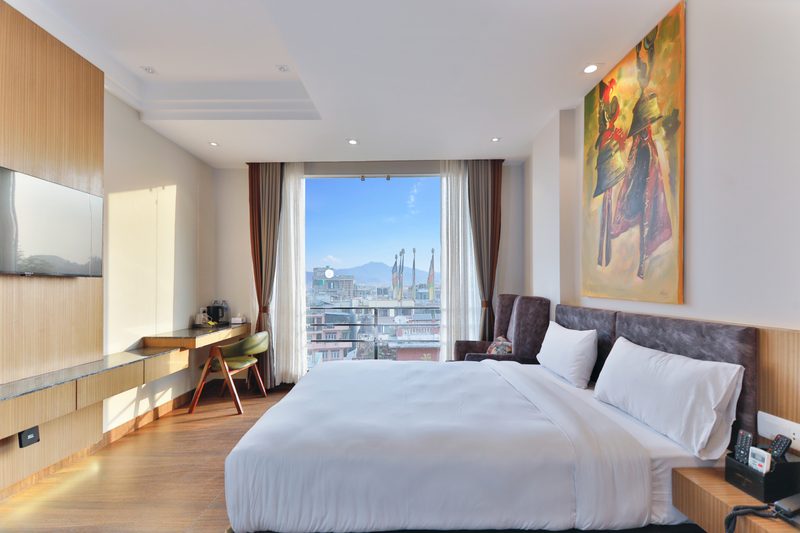
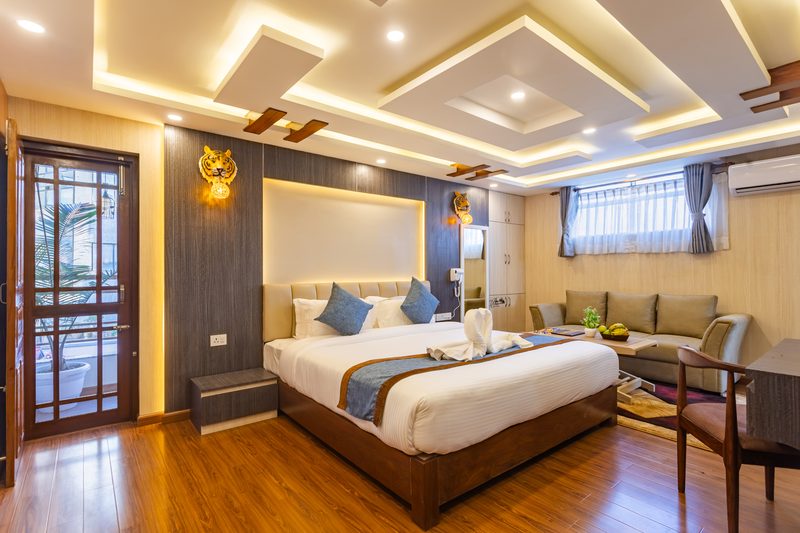
Where to Stay in Kathmandu in October
Hand-picked hotels across price tiers for October travellers.
October Events & Festivals
What's happening during your visit
Typically late September to mid-October (exact dates depend on lunar calendar)
Dashain (Vijaya Dashami)
Nepal's largest festival lands in October, reshaping Kathmandu for 15 days. The city hollows out as locals head to villages, leaving Thamel oddly quiet. Meanwhile, family courtyards in Patan and Bhaktapur erupt with activity. Listen for the slap of cardamom-scented rice flour hitting pans for sel roti. Hear the metallic ring of the swing (ping) going up. On the main day, arrive at Hanuman Dhoka in Kathmandu Durbar Square before 10 AM. Catch the rare display of the Royal Sword. Then follow your nose. Sacrificial goat blood has a distinct smell. It leads to courtyards where families receive tika blessings. The mood stays familial, not touristic.
Packing Checklist
Bookmark this page — your progress is saved between visits
Need the full list with shopping links?
Climate-specific gear, brand recommendations, and what to leave at home.
View Kathmandu Packing List →Essential Tips
Insider knowledge and common pitfalls to avoid
Insider Knowledge
Locals drink morning chai on rooftop terraces in October. This is the only month when air clarity and warmth align. Ask your guesthouse about rooftop access. Or find a cafe with a third-floor terrace in Patan.
During Dashain week, many traditional Newari restaurants close. Owners return to ancestral villages. Keep a backup list of hotel restaurants or international spots that stay open.
October brings Kathmandu's artists back to their studios after monsoon break. Galleries in Baber Mahal Revisited and Jhamel often launch new exhibitions. Check local English-language weeklies for listings.
For the clearest mountain views, drive 32 km (20 miles) to Nagarkot for sunrise. Stay overnight. Day-trippers arrive after morning haze settles. Overnight guests catch the pristine dawn spectacle.
Avoid These Mistakes
Do not assume October is 'dry season' and skip rain gear. Those 10 rainy days often cluster. A three-day downpour can strike.
Do not try booking last-minute domestic flights to Pokhara or Lukla. October is peak trekking season. Flights sell out weeks ahead even when Kathmandu itself feels manageable.
Do not visit Pashupatinath in the afternoon. Morning sun illuminates stone carvings and ghats well. By 2 PM, the temple complex sinks into deep shadow. The atmosphere shifts entirely.
Do not neglect breaking in new hiking boots before arriving. Kathmandu's uneven pavement combined with Langtang's trails will blister fresh footwear within hours.
Explore More Activities in Kathmandu
Didn't see anything interesting yet?
Browse Viator's full catalog of tours, day trips, food experiences, and private guides in Kathmandu.
See All Kathmandu Tours on Viator